

Category: Catholic
Purgatory topic
Catechism [1030-1032, 954-959]
We can die in the love of God but still deserve punishment for our sins just like a person can steal something, be sorry, but still deserve punishment. This punishment we deserve might be called the “stains of sin.” Such stains are cleansed away in a purifying process called purgatory. These stains of sin are primarily the temporal punishment due to venial or mortal sins already forgiven but for which sufficient penance was not done during your lifetime. This doctrine of purgatory, reflected in Scripture and developed in Tradition, was clearly expressed in the Second Council of Lyons (A.D. 1274).
Having passed through purgatory, you will be utterly unselfish, capable of perfect love. Your selfish ego-that part of you that restlessly sought self-satisfaction-will have died forever. The “new you” will be your same inner self, transformed and purified by the intensity of God’s love for you.
Besides declaring the fact of purgatory, the Second Council of Lyons also affirmed that “the faithful on earth can be of great help” to persons undergoing purgatory by offering for them “the sacrifice of the Mass, prayers, almsgiving, and other religious deeds” (63)
A Redemptorist Pastoral Publication. Handbook for Today’s Catholic . 4th ed. Liguori : Liguori Publications, 2004; May 19, 2009.
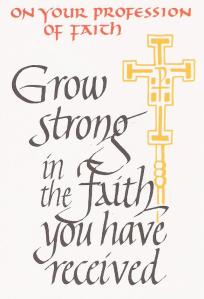
Profession
Today’s Missal
Subscription information:
Published by OCP
5536 NE Hassalo
Portland, OR 97213-3638
$13.00 per Year; (503) 281-1191
liturgy@ocp.org
OCP.org
Send address changes to:
Today’s Missal
PO Box 18030
Portland, OR 97218-0030
Embassy Suites Hotel – Walnut Creek
I am making this post out to the Embassy Suites Hotel in Walnut Creek California. These links below originated in a blog called ARNF3tracy. The presentation is still intact and is here for you now at Gevluef.
I consulted for the Hilton Hotel Corporation for a week. The presentation for Embassy Suites Hotel is in this blog and the links are in this post. The dates of the presentation were written from February 17 through February 23. This is the Presentation Summary:
- Embassy Suites Hotel Probate Bond [C/o Embassy Suites Hotel]
- Jennifer vs. Natalie
- Follicle
- Thomas Hobbes
- Specific points in Diplomacy
- Pregnancy
- Wall
- Hotel Bible
If you wish you may read the presentation. There is also a Book about Hospitality: Solomon, Micah; The Heart of Hospitality, 2016.
Church Pews
Jesus Christ
December 28, 2008
Father: Joseph
Mother: Mary
DOB: December 25th
Announcement

As a testament to the Catechism of the Catholic Church,
Hugh Farrell
will receive the essential rite of the sacraments,
Holy Sunday
during the Easter Celebration in the Year 2009.
Donate Church
 Many people who visit my blog notice there are no comments. In observance with convention you have decided not to comment as well. I know about this kind of issue. I will address that below. It is okay if you decide not to comment either. And so, a comment is not expected.
Think of this web location to have been written by an author. The reading experience here is not interactive in any direct way to me; like if I had a circle of friends. I consider it my responsibility to sort of keep up with what the reader has as their comments in mind. Thus it is my responsibility to express those directives in the form of revisions and future writtings. And so now let me tell you the reason it is like this.
People don’t comment because I need a Baptism from the Church. Correctly developed Faith in an understanding that is personal to my thinking is necessary. It’s as if I am supposed to speak a universal language based on God. Announced on December 11, 2008, I will get Baptized by the Catholic Church. I go to Mass every day. I am a Practicing Catholic. I’m not trying to convince you to comment.
Although I know that the Baptism is the requirement. And, I am going to satisfy that requirement. I probably won’t get comments anyway. I’m fine with that.
Yes this problem is catchy. If you were never Baptized this problem could happen to you. If you were baptized stay tuned. I will say a little more about Baptism.
Catholic Faith
My home page these days is the Spinoza Lounge
I am attending the RCIA Classes for my Religious Study. It is a Catholic Church and I have been in attendance for a number of years. I have done the work and my faith is strong. It goes without saying that I have a lot of knowledge to share. That I am beginning is inconvenient, yet I need to have a place to get help with my Religious needs. I know this is basic understanding. I have attended a number of Philosophy courses and the community has said that I might know what to do; I have learned a lot of Philosophy. With this much said, it is probably necessary for my place in the Church to be secured. And that that specific Philosophy Techinc will be satisfied. I’m guessing there are people waiting on this, and that after RCIA there will be a passing. Now that I am on a new channel, Baptism, I wonder if Spinoza was ever baptized?
 10 PERCENT
