Citation of Spinoza

I want to thank my associate who in a service to the health and well being of good government has resolved a dastardly tenet in my Mental Health composition.  Thank You Sir.

And Now, I would like to continue with my usual musings of knowledge and truth.  The biggest priority I can see is the editing of my Blog Posts.  As I am sure many people have glared at my mistakes, I know that it is necessary to fix them.  If I am to enjoy the benefits of being an Author, and I think I do, I should be one without cause for the other great mistake that is possible; which, far be it for me to say it here, is but a gruesome event a person will remember.  Such things are out of the realm of my responsibilities.  So, the editing will help me a lot.  I just thought those things were easier to fix with another person helping.

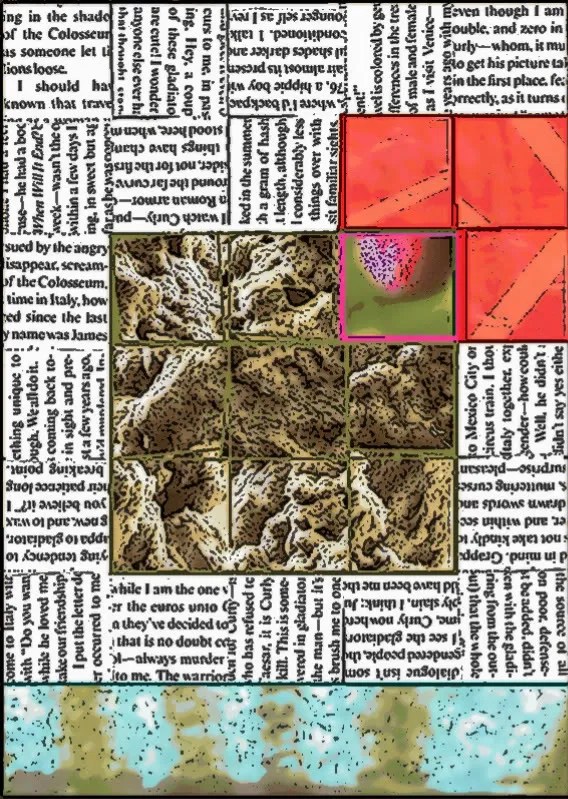
The most probable place I could improve most is by citing the The Ethics of Spinoza: Dagobert D. Runes for RHM Elwes, ed. (1957); The Ethics of Spinoza (Kensington Publishing Corp., New York; Citadel Press, 1988).  The picture included with the link is from a Google Image Search: Mount Whitney from Lone Pine.  If you would like to see Mount Whitney itself use this link. (Link to a view of Mount Whitney).

Again thank you.  I believe that I have overcome an obstacle from my past.  I know, those mystery achievements aren’t supposed to be part of the regular business.  I really do have a lot of creditability.  There is room for improvement however.

Comments to XVR

There is some question as to just what is the XVR page.  Some visitors are wondering about the situation.  I read the page today and I think that there is a lot of evidence presented, and that the reader is expected to make an integral.  So, let us take a survey of the situation.

First, the distinguishing definition that prefaces the comparison of Sartre and Ponty could also refer to one of the governing rights, though on it’s way out, a Creed.  That issue is coming to a realization by both global warming and government complications.  Keep in mind that though it seems like I have spelled things out, that it is really a difficult exercise to realize that Hume has his value in support for people who would be recessively oriented rather than dominant in nature.  That should be a Huzza for Hume!!

Okay, now that the genetic issue is being discussed, I bring to the discussion differentiation of Sartre and Ponty.  And, from that passage in XVR the intended message is that Ponty’s little engine “see” is designed to see only those indiscernible objects which will never fully come into being.  Familiar? Yes.  Ponty was developing for only the most treasured events of Phenomenology.  At the time of writing XVR I realized that Ponty was not clear about what relative “see” it is that was supposed to satisfy his engine.  I reasoned, thankfully that see would not hurt me, the genetic issue made most sense when I imagined he was referring to the twenty-third chromosome; inheritance of Sexual orientation; XY.  So the reader has to read for the distinction of the Sartre and Ponty discussion.  And most notably that Ponty may have been attracted to another gene on the basis that it was controversial; the twenty-second chromosome.  A tall order for a philosopher whose best work is less than fifty pages.

From another direction, Sartre was a major person in the self actualization for people to sort of understand their seeing character.  I am really not very well learned about Sartre’s philosophy.  I do know that he must have been very patient with Ponty and served in the clutch for most of the time.  He refused his award.  I am sure he will eventually resolve his need to get that interesting psychology term for the seeing person involved in the Ponty circumstance.  Recall that Ponty was writing about Paul Cezanne.  And since the situation was that of the naturally recessing genetic disposition, Sartre remains naturally curious.  Is it a “Pay Stub?”

The question remains in the XVR page how does any of this relate to the X or the R when the passage doesn’t ever mention the basic facts that are predicating the philosophers.  I hope at the outside there is a suspicion that XVR is a correct title by intuition alone.  I am not going to worry about it.  I feel that there is enough said without having doubt about the way in which a decision such as XVR is decided.

E. M. Forster’s excerpt

https://en.wikipedia.org/wiki/A_Room_with_a_View
Chapter:  Possibilities of a Pleasant Outing

“Yes, I wonder how he has the effrontery to look me in the face, to dare to claim acquaintance with me.  He was in my London parish long ago.  The other day in Santa Croce, when he was with Miss Honeychurch, I snubbed him. Let him beware that he does not get more than a snub.”

“What?” cried Lucy, flushing.

“Exposure!” hissed Mr. Eager.

He tried to change the subject; but in scoring a dramatic point he had interested his audience more than he had intended.  Miss Bartlett was full of very natural curiosity.  Lucy, though she wished never to see the Emersons again, was not disposed to condemn them on a single word.

Comment: March 25, 2024: I donated a lot of money. I have a room with a view. It’s George P. Thompson Jr. March 12, 1952 – June 10, 2022.

Comment: October 20, 2024: In the story of George, after the man feels insecure, the service wants to see.

Time; October 19, 2007

I want to mention Lyndon B. Johnson again.  I just said that the Civil Rights Act of 1964 was a question.  That isn’t really fair.  Firstly though I did believe that Lyndon B. Johnson may have approved the Act for everyone to go to Purgatory, but I think that there is much more to say about that time.  So, in the interest of fairness I will mention a few other things.  Let’s not forget that this president enacted more programs for the benefit of the people than any other President.  He was truely the Education President.

In my opinion, the trouble started after February 28, 1958.  I was not born then however I have read, “A Generation in Motion; Popular Music and Culture in the Sixties,” by David Pichaske.  This book was most helpful for me since the circumstance of that date has caused Lyndon Johnson a lot of anguish.

So anyway, I think Lyndon Johnson is contrary to public opinion.  That is my belief based on the Viet Nam War. It is my belief because I was born in 1968.  This was a Time of a troubled nation.  It is no surprise that I have that as part of my history.  Now I will tell you I have a lot of problems that go unnoticed.  You wouldn’t think what I just said was anything much at all, but this is my circumstance.  I have a lot of problems that go unnoticed because I’m contrary to public opinion.  I am helpful, I just know that I get problems and it’s hard to know that I am needed.  It is probably best I should just follow my own interests without too much intervention.

I’ve often mused that it would be better to be in agreement with myself.

The Architecture

The opportunity in Architecture requires a Fire-wall configuration. If I did not get that opportunity to say No, my position would be something closer to actually doing Architecture instead of the iteration “No.” I know what No is. No, is always No. But if someone were calling the Architecture issue a No is just that. I might be compelled to go into Architecture on the basis that this configuration is already in place about me. So, let’s get started.

I know right away that a Pencil is a major problem. If in the early stages I cannot manage this particular issue I will try something else.

I should let you know my thinking up to this point. (1) Bricks become a legend. The bottom of the Drafting page is made up of proportionate boxes 2 in. x 3/4 in. This is the big conclusion for the study on Bricks. (2) “EVER-READY” becomes “Look for Beauty.” This one I am a little upset about. This will probably be a reason many mature Architects build places with Windows (not a computer term). If you are concerned about this issue I have more to say. It has to do with appropriately populating; a social issue.

Now, I better stop because I’ve opened too many things. Just keep in mind that people go out of their way and so an underlying principle is understood as long as everyone is on the same page.

Prohibition and The Postal Service

mrhousingb2002.jpgmrhousingb2002.jpgmrhousingb2002.jpgProhibition began on January 16, 1920. This Posting will explain that the Post Office did indeed have some interesting packages during prohibition.

purple119x175.jpgInterestingly during prohibition, Wineries continued making wine with creative wine making practices. One acceptable method of wine making mrhousingb2002.jpgmrhousingb2002.jpgwas in conjunction with Church.

The Catholic Church needed Wine for the Religious activity of Communion. Beaulieu Vineyard, was popular; they claimed they were, “The House of Alter Wine.” The other way in which a winery could stay in business during prohibition was supporting wine making practices for people at home.

The deal was to mail the home wine maker a kit containing the materials to make the wine. Under a loophole in The Volstead Act, the head of house hold could make up to two hundred gallons of wine a year. So, Wineries would mail grape juice and concentrate under names like Forbidden Fruit, Vine-Glo and Moonmist to homes via the Post Office.

Now this would be taking place in 1915. Wine making technology was not very sophisticated. The instructions sometimes would read as a warning, “Do not place container in room temperature over 60 degrees or contents may ferment.” It is important to realize the types of grapes were used had to be hardy since the shipping was often across country. Today wines are made with grapes grown for their subtle or complex quality of wine on the palate. Alicante Bouschet and Alicante Ganzin were thus used back then but were considered bad at the very least. I imagine that they were very much like the Concord Grape used today in grape juice Concentrate.

As part of the wine making practices during prohibition the juice or grapes were shipped in the mail. This would probably mean complications during shipping. Some leakage and even soaked cardboard was an ordinary appearance at the Post Office. So this stuff was shipping; and so in time, also dried if spilled or broken. Oh how the Post Office must have hated the mail articles containing whine. Well, I have always been a little afraid of smells. But I think I know the smell they had when a household ordered a wine making kit.

Some Pretty major changes took place in the Napa Valley after prohibition which wouldn’t have been due to the pressures of the Post Office. It makes sense the wineries could use delicate grapes and thus a more complex wine on location after prohibition. However the Post Office didn’t complain or cause the political tides ending prohibition; that was because of the voters who wanted to drink.

mrhousingb2002.jpgAnd, so the interesting era ended after fourteen years where the Post Office managed things on the basis of an occasional smell. The ending of prohibition meant that wine could be shipped more appropriately. If even the occasional bottle were to leak or break the product could never have such a devastating affect as a distinctive smell since the quality of the product is much improved. There is a natural inclination for improvements yet this is probably one practice which goes into history as interesting for the Post Office and did not have any negative effect.

Melody of a Law Student

There is a difference in the Languages of English and Chinese. Interestingly the Chinese language has an object oriented assignment. With good etiquette, I have to create something that will help me to get to the Predicate without making the object assignment. I have been worried about this; in English it’s always a V.  This inane object from the Legal system is the thing separating the Plaintiffs and the Defendants. The Chinese people probably have a name for this V.  object since it also is in the middle.  So, when I see my writing and the sentences are formed, I do not say what marries my Subject/Predicate idea because I am using English.

One of the worst habits in the English language is perhaps the Comma Splice.  When, by my own design, I cause a writer to have a habit such as V, I should say the action sooner.  What in English we call a comma splice is within the mechanics of the Chinese Language an object of the matter. Thus the sentences are formed with an object assignment.

The subject, the subject, the subject action. About what? Make the action about the subject. Directly say what the subject predicates.  The hang time is like a Wave. The Moon makes the waves. You ride the wave. As in motion Surfing is exciting enough to bring the predicate closer to the Subject.  There isn’t much chance of delaying the predicate in this instance.  Is my V tanking?

Surely there are already programs in place for dealing with a person like me.  I do not know why that is, but my sentences are made up of two separate sentences. I often write a complex or compound sentence. I am sure I will someday learn about how I form sentences. But for now, let’s say that I have created an inspiration to get my predicate to come before I am concerned with an object.